Pyro
確率モデルからデータの生成
確率変数 cloudy は ベルヌーイ分布 に従う.
そこからアイスクリームの売上を表すモデルを作る(階層モデル)
import torch
import pyro
pyro.set_rng_seed(101)

def weather():
    cloudy = pyro.sample('cloudy', pyro.distributions.Bernoulli(0.3))
    cloudy = 'cloudy' if cloudy.item() == 1.0 else 'sunny'
    mean_temp = {'cloudy': 55.0, 'sunny': 75.0}[cloudy]
    scale_temp = {'cloudy': 10.0, 'sunny': 15.0}[cloudy]
    temp = pyro.sample('temp', pyro.distributions.Normal(mean_temp, scale_temp))
    return cloudy, temp.item()

def ice_cream_sales():
    cloudy, temp = weather()
    expected_sales = 200. if cloudy == 'sunny' and temp > 80.0 else 50.
    ice_cream = pyro.sample('ice_cream', pyro.distributions.Normal(expected_sales, 10.0))
return ice_creamアイスクリームの売上サンプリング()は
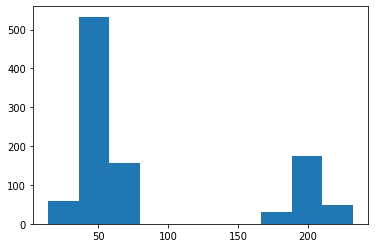
二峰性の分布になった
pyro.plate
確率変数をあたかも変数で扱える
def model(N):
    with pyro.plate("plate", N):
        cloudy = pyro.sample('cloudy', pyro.distributions.Bernoulli(0.3))
        mean_temp = 75.0 - 20.0 * cloudy
        scale_temp = 15.0 - 5.0 * cloudy
        temp = pyro.sample('temp', pyro.distributions.Normal(mean_temp, scale_temp))
        expected_sales = 50.0 + 150.0 * (1 - cloudy) * (temp > 80.0)
        ice_cream = pyro.sample('ice_cream', pyro.distributions.Normal(expected_sales, 10.0))
    return ice_cream
データから確率モデルの推論
推論: あるモデルを仮定し, パラメータを推論する